Why SOLT Use FSK Instead of LoRa, ZigBee, Wi‑Fi, or BLE

Questions like “Why not LoRa?”, “Why not Wi‑Fi?”, or “Isn’t ZigBee better?” come up regularly. This is understandable: these technologies are widely used, often discussed, and are frequently seen as universal solutions.
Our devices use radio modules that technically support multiple standards. However, the choice of FSK was made deliberately — not because other technologies are bad, but because FSK fits our task best.
FSK is not “better than others.” It is better under specific conditions and for a specific application.
Each Technology Has Its Own Role
The wide adoption of LoRa, ZigBee, BLE, and Wi‑Fi can create the impression that all other solutions are outdated or inefficient. From an engineering point of view, this is not the case. These technologies do not directly compete with each other. Each one is optimized for its own use case:
-
LoRa — for long distances and very rare messages
-
Wi‑Fi — for high data rates and constant connectivity
-
BLE and ZigBee — for networks with coordination and data exchange between nodes
In staff calling systems, the priorities are different: fast delivery of a short signal, predictable behavior, and minimal maintenance.
Power Consumption and Service Life
All modern wireless technologies claim to be energy‑efficient and able to work “for a year on one battery.” For home sensors, this is often enough.
In commercial systems, the scale is different. A single site may use dozens or hundreds of devices. Regular battery replacement quickly becomes a service burden. We need long service intervals — 4, 5 years or more.
For comparison, here is the energy required to send the same short message (10 bytes) at 9600 bit/s:
-
FSK — 23.1 µAh
-
LoRa — 92.6 µAh
-
BLE — 34.7 µAh
-
Wi‑Fi — 347.2 µAh
FSK is the most efficient option here: about four times more efficient than LoRa and more than fifteen times more efficient than Wi‑Fi.
Real Battery Life: Calculations and Practice
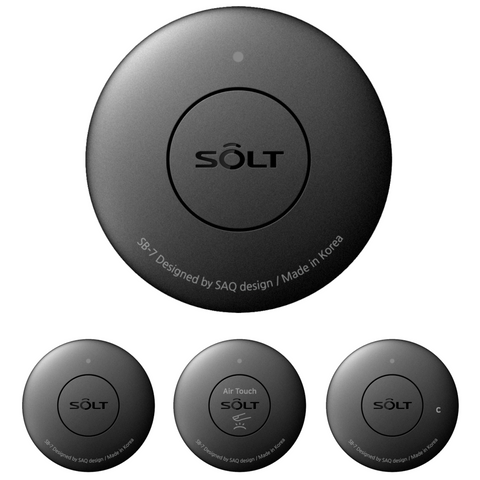
It is also important to talk about real battery life. We rely not only on calculations, but on practical testing. In a real‑world experiment with a very simple SB5 button powered by a single CR2032 battery, the device repeatedly transmitted a signal until the battery was fully discharged. The result was 25,100 button presses recorded before the device stopped working.
In standby mode, the device consumes only fractions of a microampere. Over a year, this is less than 1 mAh, which is lower than the natural self‑discharge of the battery itself. This means that in real conditions, the device ages not because of electronics, but because of time. In practice, the remote can be used for many years without battery replacement, even with regular use.
This result is achieved not through compromises, but through short transmissions, a predictable current profile, and the absence of network overhead — key properties of FSK modulation.
Range and Network Architecture
LoRa provides very long range, but in license‑free bands it comes with strict limits on duty cycle. This requires long pauses between transmissions. In addition, the available frequency band is narrow and subject to regulatory constraints.
Wi‑Fi and BLE have a relatively short range and typically require mesh networks. This increases deployment and maintenance complexity.
ZigBee is a mature and reliable technology, but its network architecture requires coordinators and routers that must always be powered on and managed.
In our implementation, FSK works in a point‑to‑point mode. The transmitter sends the signal directly to the receivers, without intermediaries or network logic. Typical range is up to 200 meters line of sight and about 100 meters inside buildings. This is more than enough for restaurants, hospitals, and industrial facilities.
When coverage needs to be extended, repeaters are used. These are passive devices that do not require configuration or ongoing maintenance.
Narrow Bandwidth and Interference Resistance
FSK uses a narrow frequency band, which reduces the risk of interference and improves link stability:
-
FSK — 12.5 kHz
-
LoRa — 125–500 kHz
-
ZigBee — about 2 MHz
-
BLE — about 2 MHz
-
Wi‑Fi — 20–80 MHz
A narrowband signal passes through walls and metal structures more effectively, because less energy is spread across the spectrum. In dense buildings and crowded radio environments, this is critical.
Simply put, this is the difference between trying to shout in a noisy room and delivering a quiet, focused message directly to the intended receiver.
The 433 MHz Frequency Band
Today, the 433 MHz band is less congested than many alternatives. In the past, it was heavily used by car alarms and consumer devices, but over time most manufacturers moved to other frequencies and technologies.
Fewer devices in the band mean less interference and more predictable operation.
This band is license‑free, and the transmitter power complies with applicable regulations.
Honest About Trade‑Offs
In many applications, FSK is inferior to modern protocols in terms of data rate, range, network features, and data volume.
In staff calling systems, these advantages are not required. What matters here is reliability, predictability, low latency, and years of operation without maintenance.
That is why FSK is not a universal choice, but a precisely selected tool for our task.